- Call: +91 9860995552
- Nashik, Maharashtra, India
- info@pdstechnosales.com




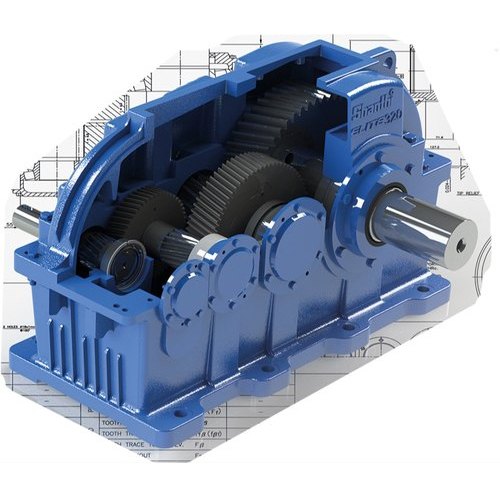
Industrial Gear Boxes
In today’s industrial world, gearboxes play an important role in handling different industrial and mending functionalities. Defining a gearbox will give you the box that contains succession of gears attached with a gear knob that works towards providing the speed and torque conversions using different gear ratios. The gearbox is used to fix the machines or pedal bicycles, etc. In almost every industry or manufacturing unit, the industrial gearboxes are getting used. Almost every type of machinery falls under the usage category that calls for application of one or the other type of gearbox application.
Though, the usage differs as per the industry type. But the bottom line is that the gearboxes are made to ease out the mechanical functioning in different industries. For a better understanding of the gearbox processing, we have come upon with work performance report of the gearbox used in different industries.
An industrial gearbox is an enclosed system that transmits mechanical energy to a transmission unit. The system slows down the speed and torque of rotation. Industrial gearboxes are different from standard gearboxes, as the former needs a long, stable life and safety factor for most of the drives. To control speed and torque and convert it functionally, an industrial gearbox transmits mechanical power into a driving tool. In contrast to mass gearboxes, industrial gearboxes can handle multiple tasks at extremely high speeds over a long period.
An industrial gearbox, especially in the form of Worm Gearboxes, is most commonly used for heavy-duty functions. This type of gear integrates a broad worm (or screw) diameter which meshes the teeth in the periphery of the gear. The device then makes it possible for the consumer to determine the rotation speed and for the transmission of higher torque. Worm gears are used for 90 degrees of transmission plus elevators and conveyor belts.
Bevel Gears have curved teeth on cone-shaped surfaces near the unit bottom. They can be used to rotate non-parallel shafts and have a broad range of applications, including rolling stock and mining.
Helical gearboxes are large and utilize low power. When two teeth start to meet, the teeth of helical gears are shut down to an angle to the face of the machine, by one end of the tooth and remain in touch as the machine rotates completely into contact. The design allows a smoother running of the industrial gearbox and allows for high load angles. The helical gearbox can also express movements between parallel and right shafts.
n advanced technologies, such as robotics and 3D printing, this form of the gearbox (industrial gearbox) is common. Three of four planet gears surround a planetary gearbox with a central Sun Gear. Both these are held together via inner teeth outer ring equipment. This design similarly spreads power through the gears and makes it possible for a Planetary Gear System to achieve a high torque in a limited area. High endurance and precise are the two popular features of Planetary Gearboxes.


